SOAKAWAYS WOLVERHAMPTON 7 DAYS NO VAT

Soakaways Wolverhampton
01902 762274
07768 297435
Soakaways Wolverhampton
Are you having problems with a rainwater or wastewater soakaway ? We trace, unblock and renew soakaways in Wolverhampton and surrounding areas.
What is a rainwater soakaway?
A rainwater Soakaway is a deep hole in the ground usually filled with gravel or rubble. More modern systems utilise crates. Rainwater runs into the Soakaway and fills the cavities between the infill material, this water is then gradually absorbed into the surrounding ground. Any soakaway is very much dependant on the soil permeability.
For the Soakaway to work efficiently and over a prolonged period of time, the water going in should be clean and free of debris such as leaves and moss which cause restriction and blockages and can result in the soakaway having to be dug out and renewed. It is possible to fit a filter to the rainwater system to prevent the entry of debris. Soakaways can provide an effective method of disposal of water from impermeable areas.
Long term maintenance and inspection must be considered during the design process.
If your Soakaway in Wolverhampton is blocked call John direct on 07768 297435.
What is a wastewater soakaway ?
A wastewater soakaway is the section of a drainage system that follows from a septic tank or sewage treatment plant. The purpose of this type of soakaway is to allow the liquid waste that has left the septic tank to percolate through the soils surrounding the pipework. The soakaway pipework is perforated or slotted to enable this to happen.
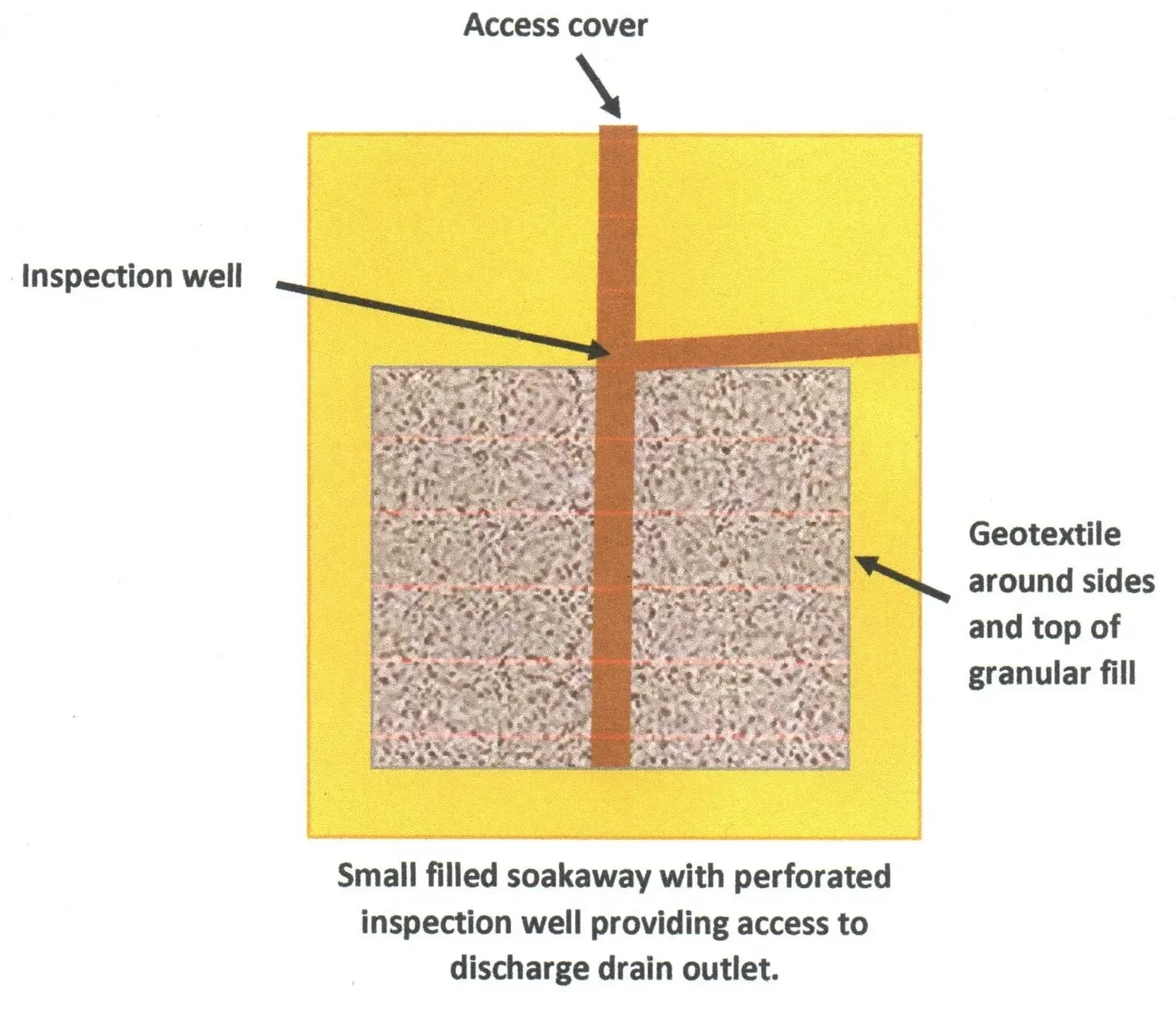
Granular material must be separated from the surrounding soil by a suitable geotextile to prevent migration of fines into the soakaway. If migration from the surrounding soil occurs, it can cause ground settlement around the soakaway sufficient to affect the stability of adjacent buildings. The top surface of the granular fill should also be covered with geotextile to prevent the ingress of back fill material during and after surface reintatement.
What are soakaway crate systems ?
Soakaway crate systems are more effective than rubble filled pits. If installation of a crate system is being considered a percolation test should first be performed on the soil to determine the ground conditions and the roof that will discharge to it measured, for the number of crates required to be calculated. Permission from the local authority may be required for installation of the system.
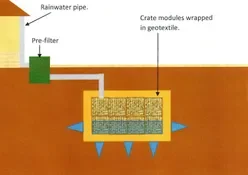
The crates which look like milk crates are lowered into the ground to provide a void, they are extremely tough and can carry a considerable load, several types are available for different applications.
The crates are wrapped in geotextile membrane and surrounded by pea shingle to allow water in and out.
How do I recognise soakaway problems ?
If soakaways are restricted or blocked, excessive rainfall can lead to
• overflowing gullies and manholes
• Damp walls
• Localised flooding to drives and patios.
• Flooded cellars.
Soakaway tracing
One of the biggest problems with soakaways has always been finding them. We use electronic drain tracing or a CCTV drain survey to do this.
Soakaway maintenance and inspection
Maintenance of soakaways has alaways presented problems this is certainly the case with rubble filled ones. All soakaways should be provided with some form of inspection access, so that the point of discharge of the drain to the soakway can be seen. The access will identify the location and will allow any problem material to be cleared from the soakaway.
Little monitoring of soakaway performance is done, this could be most informative about changes in soil infiltrtion rate and in warning of soakaway blockage in the long term. The inspection access should provide a clear view to the base of the soakaway, even when the soakaway is of the filled type. For small filled soakaways a 225mm perforated pipe provides a suitable inspection well. Lined soakaways have the advantage of access for inspection
Trench type soakaways
Trench type soakaways should have at least two inspection access points, one at each end of a straight trench, with a horizontal perforated or porous distributor pipe linking the ends along the top of the granular fill. It may be convenient with a trench soakaway to have several drain discharge points along the length of the trench, each connected to the soakaway via an inspection chamber.
In trench type soakaways the movement of suspended and floating material into the distibutor pipe can be minimised by using wet wells with a T-piece inlet fitted to the distributor pipe. Two or more T-piece inlets to distributor pipes in two or more trench soakaways may be appropriate for large wet well designs.
Perforated pre-cast concrete ring soakaways
Concrete ring soakaways are typically used for larger surface water drainage projects, they are designed to handle greater volumes of water and are effective in preventing flooding. They are suitable for both residential and commercial applications, but their bulk and capacity make them more suitable for larger installations.